Stephen Colbert’s claim that CBS lawyers spiked a Democrat interview is fueling a new fight over media power, election messaging, and whether “censorship” is being used as a political weapon.
Story Snapshot
- Stephen Colbert said CBS prevented him from airing an interview with Texas Democrat James Talarico, blaming lawyers and pointing to political pressure.
- CBS publicly disputed the idea it “blocked” the segment, setting up a credibility clash between a star host and his corporate parent.
- Major outlets framed Colbert’s remarks as a free-speech controversy tied to the current political environment and federal scrutiny of broadcasters.
- Kari Lake is not documented in the provided research as reacting to Colbert’s network-related complaints; that premise could not be verified.
What Colbert Said Happened at CBS—and Why It Matters
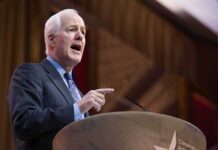
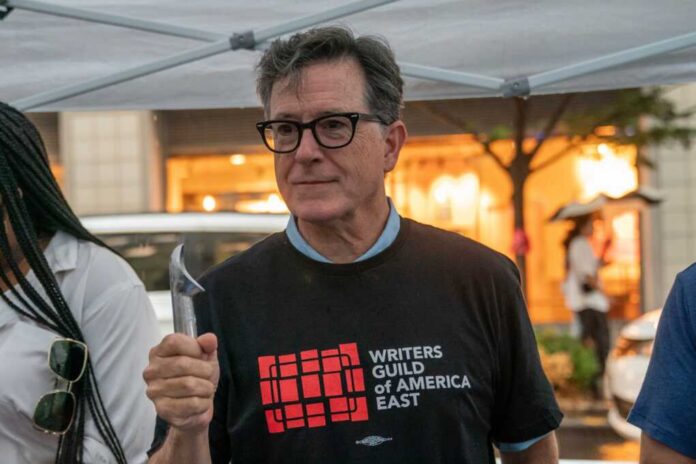
Stephen Colbert alleged that CBS did not allow him to broadcast an interview with Texas state Rep. James Talarico, a Democrat, and he described the decision as coming from “CBS lawyers.” Reporting summarized the dispute as Colbert criticizing his own network over political content, with Colbert also tying the situation to broader concerns about pressure on media companies. The core factual point supported by the research is the claimed internal intervention over political programming.
Colbert’s public complaint matters because it places a major broadcast network in the middle of a familiar American argument: who decides what voters get to see, and what role corporate risk-management plays during election season. When internal lawyers or executives are perceived as shaping political coverage, audiences tend to assume ideology or intimidation is at play. The available research does not confirm motive beyond what Colbert asserted and what CBS later denied.
CBS’s Response and the Competing Narratives
Other coverage in the provided research states CBS responded to backlash by denying it blocked the interview, creating two competing narratives: Colbert’s claim that legal caution or political conditions stopped the segment, and the company line that disputes that characterization. Reporting also describes Colbert framing the situation as censorship, while CBS rejects that framing. Without the full internal communications, the record available here supports only that a dispute exists, not which side is definitively correct.
For conservative viewers, the bigger takeaway is less about Colbert’s comedy brand and more about institutional control. If a network can halt political content for legal or regulatory risk, that is a form of gatekeeping—whether it is justified prudence or viewpoint-driven interference. The sources provided do not establish that the intervention was ordered by government, nor do they prove partisan intent; they show public allegations, denials, and heavy political context.
Where the Kari Lake Angle Breaks Down
The user’s original topic included “Kari Lake reacts,” but the supplied research explicitly states there is no evidence in the available results showing Lake responding to Colbert’s alleged network-related complaints. The verifiable Lake-related material in the research set centers on earlier coverage: her 2022 Arizona gubernatorial race, her election-administration positions, and media satire directed at her after that contest. Those items do not connect to a confirmed, on-record Lake reaction to the CBS-Colbert dispute.
Earlier Coverage: Colbert’s Past Focus on Lake and Arizona Elections
Separate from the newer network controversy, the cited material includes prior reporting and commentary on Kari Lake’s 2022 campaign and disputes around election administration in Arizona. That coverage described concerns about “election deniers” and how state officials could change voting rules, while entertainment coverage summarized Colbert’s monologue mocking Lake after her loss to Katie Hobbs. Those sources establish the long-running media-versus-populist-right dynamic, but they do not verify the specific “Lake reacts” premise for 2026.
Last night, CBS refused to air Stephen Colbert’s interview with Texas Democrat James Talarico after pressure from Trump. Colbert addressed the issue with his audience and released the clip online anyway.
RETWEET to thank Colbert for standing up for free speech! pic.twitter.com/oW4FZRV4i5
— Protect Kamala Harris ✊ (@DisavowTrump20) February 17, 2026
Because the provided research set mixes older Arizona-election material with the newer Colbert-CBS dispute, readers should be careful about drawing a straight line between them. What can be said, based strictly on what’s provided, is that Colbert has previously targeted Lake in satire and that Lake has been central to election-integrity debates. What cannot be said, from these inputs, is that Lake answered Colbert’s CBS complaints directly.
Sources:
election deniers could make radical changes to arizona voting
Tough break: Stephen Colbert trolls