
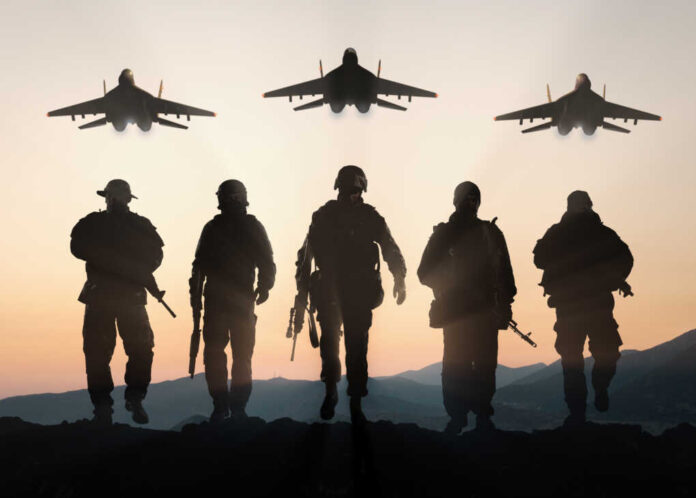
After years of muddled “endless war” politics, U.S. warplanes just delivered a clear message to ISIS in Syria: under President Trump, killing American soldiers carries a fatal price.
Story Snapshot
- U.S. and partner forces launched large-scale retaliatory airstrikes across Syria under Operation Hawkeye Strike after ISIS killed two Iowa Guard soldiers and a U.S. interpreter near Palmyra.
- The campaign has already hit more than 70 targets, removed dozens of ISIS operatives, and destroyed weapons caches, signaling a sustained push to crush remaining terror cells.
- CENTCOM’s blunt vow to “find you and kill you anywhere in the world” marks a sharp return to deterrence after years of mixed signals under prior leadership.
- For conservatives, the operation underscores Trump’s focus on protecting U.S. troops, projecting strength abroad, and refusing to let ISIS exploit chaos in Syria to threaten Americans.
Retaliatory Strikes Turn Grief into Resolve
On January 10, 2026, U.S. forces and allied partners launched coordinated, large-scale airstrikes on ISIS targets spread throughout Syria, the second major wave of a campaign now known as Operation Hawkeye Strike. The mission was triggered by a December 13 ambush near Palmyra, where an ISIS gunman murdered two Iowa Army National Guard sergeants and a U.S. civilian interpreter attached to their unit. Their deaths turned long-running counterterror operations into a focused promise of justice, not another forgotten headline.
The name “Hawkeye Strike” is no accident; it ties the campaign directly to Iowa’s National Guard and reminds Americans that those wearing the uniform are our neighbors, not statistics. Within days of the ambush, CENTCOM and Jordan unleashed an initial strike package on more than 70 ISIS targets in central Syria, using precision munitions, fighters, helicopters, and artillery. That first wave set the tone: this was not a symbolic show of force, but a sustained effort to break ISIS networks that thought they could hide in Syria’s deserts.
Operation Hawkeye Strike Targets ISIS Infrastructure and Networks
Between December 20 and 29, U.S. and partner forces followed the opening barrage with at least eleven missions that killed or captured nearly twenty-five ISIS operatives and wiped out four weapons caches across Syria. Those numbers matter because they show a deliberate approach: intelligence-driven raids to remove bombmakers, planners, and facilitators rather than just demolishing empty buildings. The January 10 strikes built on this groundwork, hitting additional sites across the country to keep ISIS from regrouping, rearming, or shifting its fighters to new safe havens.
For a conservative audience fed up with carefully worded half-measures, CENTCOM’s messaging has been unusually direct. Commanders framed the campaign as force protection and counterterrorism, stressing that ISIS cells in Syria plotted at least eleven attacks or attempts against U.S. targets in 2025 alone. By publicizing that threat stream, the military made clear that these strikes are not about nation building or “policing the world,” but about neutralizing terrorists before they can target Americans at home or abroad. That is a core national security role most on the right still strongly support.
Trump’s Deterrence Doctrine and Restored U.S. Credibility
Politically, the timing and tone of Hawkeye Strike fit President Trump’s broader posture in his second term: America will not ignore attacks on its troops, and enemies will not be allowed to believe Washington is distracted by domestic culture wars. Media outlets across the spectrum noted that Trump seeks to project toughness in the Middle East at a moment when Iran-backed militias, ISIS remnants, and regional rivals constantly test U.S. resolve. These Syria strikes show that while the administration has cracked down on illegal immigration and globalist entanglements, it is not retreating from legitimate self-defense.
The most striking line out of CENTCOM has been its public vow that if ISIS harms American warfighters, the United States will “find you and kill you anywhere in the world.” For many conservatives, that is the plain-language deterrence they felt was missing during years of carefully calibrated statements under the previous administration. Instead of apologizing for American power or hiding military action behind vague phrases, Trump’s Pentagon is spelling out a simple rule: attack Americans and you will not outwait, outtalk, or outlawyer the response.
Why These Strikes Matter to Constitutional Conservatives
For readers who are rightly wary of endless deployments, the scale and structure of Hawkeye Strike are important. The U.S. footprint in Syria remains a few hundred troops focused on counter-ISIS missions, relying heavily on airpower and trusted local partners instead of large ground occupations. That model keeps the mission tied to a narrow constitutional purpose—protecting citizens from foreign enemies—while avoiding open-ended nation building. At the same time, it sends a warning to jihadists who might otherwise see Western restraint as weakness.
Families of Sgt. Edgar Brian Torres-Tovar, Sgt. William Nathaniel Howard, and interpreter Ayad Mansoor Sakat have become powerful symbols of what is at stake. Their sacrifice highlights why many conservatives accept targeted force abroad when it is clearly tied to preventing further attacks on Americans. Where past leadership too often blurred the line between defending the homeland and chasing utopian projects overseas, Hawkeye Strike is being presented as a focused, finite campaign: dismantle ISIS nodes that threaten U.S. troops and deter anyone tempted to try another Palmyra-style ambush.
Ongoing Risks and the Road Ahead
Despite the clear battlefield successes, risks remain. History shows ISIS and similar groups often answer significant losses with propaganda and attempted revenge attacks to prove they are still relevant. Central Syria’s vast desert terrain, crowded with Syrian regime forces, Iranian-linked militias, Russian elements, and local groups, offers room for ISIS cells to relocate and adapt. That reality is why CENTCOM emphasizes persistence, continued intelligence, raids, and, when necessary, large-scale strikes, to keep pressure on remaining networks rather than declaring premature victory.
U.S. launches retaliatory airstrikes on ISIS in Syria, CENTCOM says | Just The News https://t.co/vrmTxEeG9O
— Dian (@Dian5) January 10, 2026
For Americans exhausted by years of foreign policy drift, the lesson from Hawkeye Strike is twofold. First, pulling back from globalist overreach does not mean abandoning the basic duty to hunt terrorists who target our people. Second, clarity matters: clearly defined objectives, a limited but lethal footprint, and unambiguous warnings to our enemies reduce the chance of miscalculation. As long as ISIS believes attacking Americans will end with destroyed compounds, dead operatives, and no place to hide, it will think twice before turning its sights on our troops again.
Sources:
US carries out additional ‘large-scale’ strikes on ISIS targets in Syria
US strikes ISIS in Syria
CENTCOM forces remove ISIS operatives in Syria after large-scale strike
US launches new retaliatory strikes against ISIS in Syria after deadly ambush
U.S., Partner Forces Strike ISIS Targets in Syria (CENTCOM press releases)