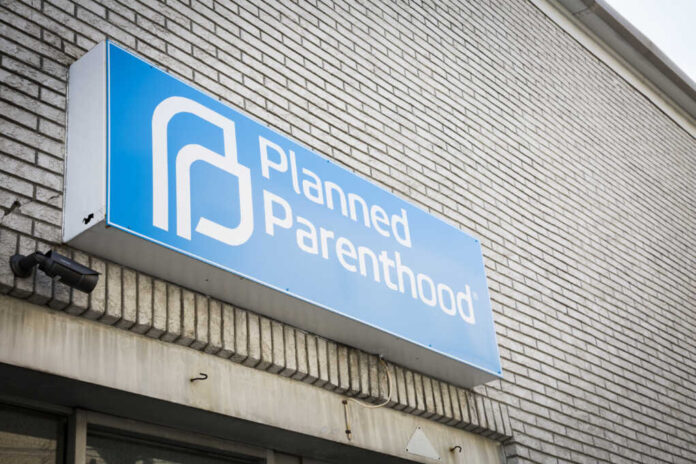
Claims of deceptive practices by Planned Parenthood threaten to undermine trust in reproductive health services.
Story Snapshot
- Allegations against Planned Parenthood suggest eugenics-based deception.
- Margaret Sanger’s eugenics affiliations fuel ongoing debate.
- Historical context: U.S. abortion law evolution.
- Implications for minority communities and reproductive rights.
Allegations of Deception in Reproductive Health Services
Conservative commentators have reignited debates over Planned Parenthood’s historical roots, alleging that the organization’s founding under Margaret Sanger was steeped in eugenics and aimed at deceiving minority communities into accepting abortions. This narrative suggests that the promotion of reproductive services has historically masked a darker agenda to target “unfit” populations, with ongoing implications for today’s debates over abortion access and women’s rights.
Wake Up! How Americans were DECEIVED into having ABORTIONS https://t.co/jeYZP5IrV4
— [email protected] (@2010Cather93710) January 12, 2026
These claims are grounded in Sanger’s controversial support for the eugenics movement, which aimed to improve genetic quality by controlling reproduction among certain groups. Critics argue that the widespread availability of abortions disproportionately affects minority communities, a point underscored by the distribution of clinics in urban areas. This perspective sees Planned Parenthood not as a healthcare provider but as a continuation of these eugenic ideals.
Historical Context and Legal Developments
The evolution of U.S. abortion laws has been marked by significant shifts, from 19th-century criminalization to the landmark Roe v. Wade decision in 1973, which legalized abortion nationwide. This decision was reaffirmed by Planned Parenthood v. Casey in 1992, albeit with some restrictions allowing states to impose certain barriers to access. The Casey decision introduced the “undue burden” standard, which has since guided legal debates on what constitutes acceptable limitations on abortion rights.
Many pro-life advocates have leveraged the Casey ruling to push for more restrictive laws, citing moral and ethical concerns. These efforts often target regulations perceived as permissive, such as waiting periods and parental consent laws, arguing for the protection of unborn lives. However, the debate remains deeply polarized, with each side invoking constitutional and human rights to bolster their positions.
Implications for Minority Communities
Critics of Planned Parenthood argue that the organization’s practices continue to disproportionately impact minority populations, with statistics showing higher abortion rates among African American and Hispanic communities. This disparity is often cited as unintended evidence of eugenics ideologies at play, despite Planned Parenthood’s public disavowal of Sanger’s eugenic past. Opponents emphasize the need for more equitable healthcare solutions that genuinely support women’s health without coercion.
Supporters of Planned Parenthood, however, argue that access to abortion and reproductive services is a fundamental right that empowers women to make choices about their bodies. They stress that these services are crucial for safeguarding women’s health, especially in cases where carrying a pregnancy to term poses significant risks. The ongoing debate underscores the complexity of balancing individual rights with societal values, a challenge that continues to shape the political landscape.
Sources:
Planned Parenthood v. Casey
Historical Abortion Law Timeline
The Dark History Behind Planned Parenthood
The History of the Pro-Life Movement in America
Abortion in America: A Visual Timeline