
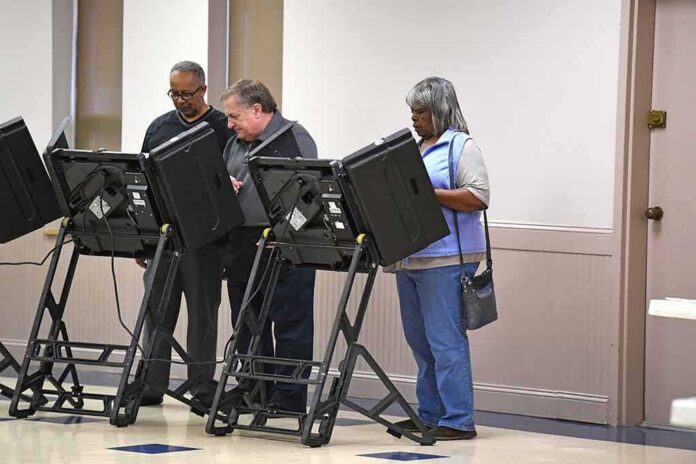
Every ballot scanner in a key New York swing county stopped working on Election Day, forcing poll workers to stuff paper ballots into emergency bags by hand.
Story Snapshot
- Ballot scanners failed at most polling sites across Westchester County, New York, on November 3, 2026.
- County officials blamed ballot paper thickness, though software issues and misprinting were also suspected.
- Rejected ballots went into orange emergency bags to be hand-counted before machine-cast ballots.
- The glitch struck during a tight congressional race between Representative Mike Lawler and Democrat Cait Conley.
- Officials, including the state attorney general, said every vote would still count despite the breakdown.
Scanners Failed Across the County
Voting machines stopped accepting ballots at polling sites throughout Westchester County on Election Day morning. NBC New York reported that scanners at several sites would not take ballots, while CBS New York described problems at most polling locations countywide. News 12 reported the same pattern, noting the trouble appeared widespread rather than limited to one machine or site.
Representative Mike Lawler, whose New York 17th district race was considered one of the most competitive in the country, said there was “a problem with every ballot scanner” in the county. That claim, echoed across local broadcasts, turned a local equipment glitch into a story with national stakes, since the outcome could help decide which party controls the House of Representatives.
Officials Scramble With Paper Ballots
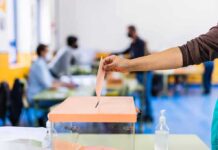
The Westchester County Board of Elections told poll workers to keep checking in voters and handing them paper ballots even though the scanners could not read them. Workers placed the rejected ballots into orange emergency bags, a standard backup system already familiar to poll staff. News 12 reported those bagged ballots would be sent to the county Board of Elections and counted before machine-cast ballots on election night.
New York Attorney General Letitia James said her office was watching the situation and told voters not to panic. “Westchester voters can still safely fill out and turn in their ballots at their polling locations,” James said. “Your votes will count”. Democratic candidate Cait Conley also urged voters to stay in line rather than leave without casting a ballot.
Cause Remains Unsettled
The Board of Elections initially pointed to ballot thickness as the likely culprit, saying thicker-than-usual paper stock was jamming the machines. But local outlet the Croton Chronicle reported that software problems and possible misprinting of Election Day ballots were also suspected, while cautioning that the county had not confirmed an actual cause. A Board of Elections statement captured the uncertainty directly: “We do not yet know the exact cause of the issue, whether it is the ballot or the machine”.
That unresolved explanation matters because it leaves room for competing interpretations. Nothing in the available reporting shows votes were altered, lost, or counted incorrectly. But a countywide equipment failure with no confirmed root cause, paired with a hand-count process that delayed results in a nationally watched race, is exactly the kind of gap that fuels distrust on both sides of the aisle when official answers lag behind public anxiety.
A Familiar Pattern of Election-Day Glitches
Researchers who study voting technology note that optical-scan systems can fail for mundane reasons having nothing to do with fraud, including misreads, paper jams, and incomplete accounting of ballot batches between processing stages. Studies of voter confidence also show that negative experiences at the polls, like long lines or broken machines, tend to shake public trust in elections even when the final count turns out accurate.
That pattern fits what unfolded in Westchester. Voters watched machines reject ballots in a race with national implications, then relied on county officials and the state attorney general for reassurance that votes would still count. Whether the final tally matches voter intent will depend on the reconciliation between hand counts and machine totals, records that have not yet been made public.
Every ballot scanner in Westchester County went down this morning, in one of the most competitive House districts in the country. Voters are still casting paper ballots, which go into secure orange bags to be counted. Stay in line and vote. Do not let a broken machine decide this…
— Lc (@ryukd) November 3, 2026
For now, the episode stands as a reminder that even routine equipment failures can rattle confidence in a system many Americans already view with suspicion, regardless of political party. Until Westchester County releases a full accounting of what went wrong and how every ballot was ultimately counted, questions raised on Election Day are likely to linger well past it.
Sources:
townhall.com, myrye.com, abc7ny.com, cbsnews.com, fox5ny.com, westchester.news12.com