

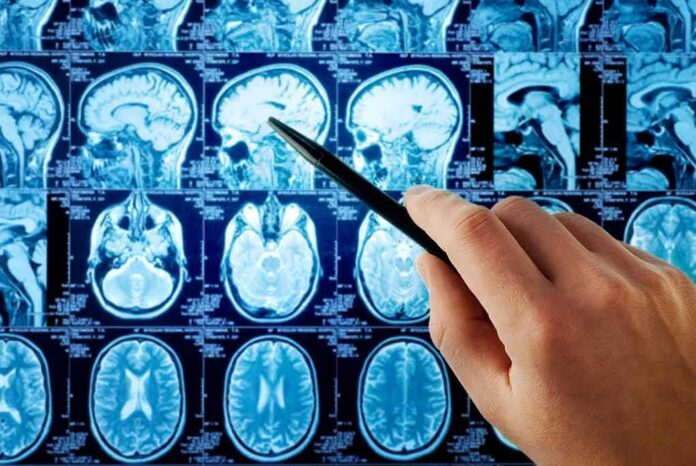
A small randomized trial found that eating 60 grams of peanuts daily for 16 weeks changed how key memory regions of older adults’ brains responded to insulin.
Story Highlights
- Researchers saw a regional brain-insulin response after a daily peanut diet in older adults.
- The signal appeared in memory-linked areas, including the hippocampus region.
- The trial used a crossover design with two 16-week periods and an 8-week washout.
- The study did not test dementia risk or long-term memory outcomes.
What the randomized trial actually tested
Maastricht University researchers ran a randomized, single-blind, controlled crossover study in 31 older adults. Participants completed two 16-week periods in random order. One period included 60 grams per day of unsalted, skin-roasted peanuts. The other had no peanuts. An eight-week washout sat between periods. The team then measured the brain’s blood-flow response to intranasal insulin using magnetic resonance imaging scans to see how the brain reacted.
The study’s primary endpoint was the change in cerebral blood flow after insulin, not a self-reported memory score. That design gave an objective biological measure. The crossover setup let each person serve as their own control, which helps reduce noise from differences between people. Researchers reported a change after the peanut period compared with the no-peanut period, pointing to a peanut-linked effect on brain insulin response.
Where in the brain the change showed up
The reported change was regional, not global. It appeared in a right-hemisphere cluster that included parts of the lingual gyrus, hippocampus, parahippocampal gyrus, and posterior cingulate gyrus. These areas help process memory and visual information. That location makes the signal more meaningful than a random change. It links a daily food to a known memory network response after insulin in older adults, at least in this small sample.
Insulin in the brain helps regulate blood flow and supports memory circuits. Prior studies tie disrupted brain insulin signaling to age-related decline. By targeting the insulin response directly, this trial looked closer at a pathway that could matter with aging. Still, the finding was localized. It did not show a uniform brain-wide shift. That matters for how we read the result and what we expect from diet changes.
What this means—and what it does not claim
The data show a peanut-linked change in a brain insulin biomarker after 16 weeks. The trial does not show that peanuts prevent dementia, stop cognitive decline, or improve daily function. One study summary also notes that the insulin-related change did not line up with earlier verbal recognition memory changes within this project, underscoring the need for more work to connect biology to behavior. A larger, longer trial with matched calorie controls would test if the effect is peanut-specific.
Daily consumption of unsalted, skin-roasted peanuts beneficially affects regional brain insulin responsiveness in older adults
▶️ 16 weeks of unsalted, skin-roasted peanut consumption had a potentially beneficial effect on regional brain insulin responsiveness in memory-related… pic.twitter.com/WcDdS80bZY
— Ricardo Montes T (@RicardoMTorr) November 1, 2026
This study fits a wider pattern in nutrition science. Small, careful trials often find a plausible biological signal. Public messages then leap to big health promises. Reviews of nut studies show mixed designs and mixed results on real-world cognition. Several meta-analyses report no clear, consistent cognitive benefit across trials. That history suggests this new peanut finding is a starting point, not a prescription for brain health yet.
Sources:
sciencedaily.com, cris.maastrichtuniversity.nl, scitechdaily.com, wfmz.com, le-biohacker.fr, onderzoekmetmensen.nl