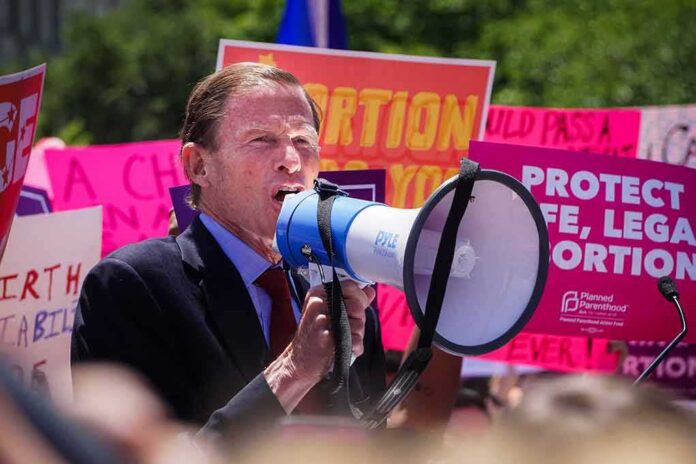
Massachusetts has erased its old 24-week abortion cutoff, handing late-pregnancy decisions to doctors instead of lawmakers.
Quick Take
- Governor Maura Healey signed H.5595 into law on Monday.
- The law removes the state’s previous post-24-week limits on abortion.
- Physicians may now rely on their professional judgment for later-pregnancy care.
- The change puts Massachusetts among the states with the broadest abortion access.
What the New Law Changes
Governor Maura Healey signed legislation that updates Massachusetts abortion law and removes the state’s prior four-part framework for abortions at or after 24 weeks. The new law replaces fixed statutory categories with a standard that allows a physician to use professional judgment when providing care later in pregnancy. Supporters say that shift gives patients and doctors more control over difficult medical decisions.
Before this change, Massachusetts law allowed abortions after 24 weeks only in narrow cases, including risks to the patient’s life or health and certain fetal diagnoses. The new statute removes those listed exceptions and gives licensed physicians wider discretion, according to the Massachusetts House and reporting on the final bill. That is why backers describe the change as expanding access throughout pregnancy.
Why Supporters Backed the Bill
State lawmakers who backed H.5595 said the goal was to keep patients from leaving Massachusetts for care and to let clinicians make the final call in late-pregnancy cases. The Massachusetts House said the bill would ensure “medically necessary abortion care” could be based on a physician’s judgment. That argument fits a larger national debate over whether elected officials or medical professionals should set the limits.
Supporters also pointed to the practical side of the issue. When pregnancy complications arise late in term, they argue, doctors need room to act quickly without waiting for legal categories to match every case. That view has become a common theme in states that have loosened abortion rules after the Supreme Court ended federal protection in 2022.
Why Critics See a Bigger Shift
Critics say the law goes far beyond a simple update because it removes the last clear cutoff and replaces it with open-ended medical discretion. Some outlets and advocacy groups describe that result as abortion “up until birth,” while the law’s supporters describe it as physician-led care. Both descriptions reflect the same legal change, but they use very different language to frame its reach.
🇺🇸 Massachusetts Gov. Maura Healey has signed a sweeping abortion law removing the state’s 24-week gestational limit.
Follow: @europa pic.twitter.com/ps8bLno8v8
— Europa.com (@europa) August 11, 2026
Massachusetts already had some of the country’s broadest abortion access, but this law pushes it further by ending the old 24-week structure. The political fight now sits at the same point seen in other states: one side sees medical freedom and patient access, while the other sees the removal of meaningful limits. For many readers, the deeper issue is who gets the final word when pregnancy is far along.
Sources:
19thnews.org, wgbh.org, boston.com, malegislature.gov, capitalisminstitute.org, washingtonexaminer.com, ewtnnews.com, reproequitynow.org, facebook.com, thehill.com