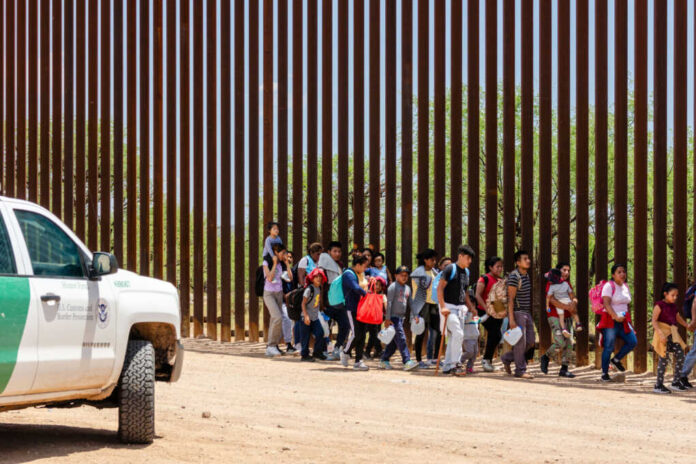
A convicted smuggler drugged little kids with THC candy to slip them past U.S. border officers, and the case raises hard questions about how a system run by elites let it get this far.
Story Snapshot
- A Mexican national got five years in prison for smuggling drugged children, ages 5–13, from Juarez into El Paso.
- Court records say smugglers used candy laced with THC to sedate the children, and one child was hospitalized with THC poisoning.
- The group pretended to be the children’s parents and used U.S. identity documents to get them through official border checkpoints.
- The case fits a larger pattern of human smuggling and rising drug flows at the southern border, while detailed evidence remains hidden from the public.
What Happened in the THC Candy Child Smuggling Case
According to the U.S. Department of Justice, 35‑year‑old Manuel Valenzuela, a Mexican national living in El Paso, was part of a human smuggling group that moved unaccompanied children from Juarez, Mexico, into the United States. Court documents say the children were between five and thirteen years old and were brought across the border multiple times over several months. Federal prosecutors state the group sometimes used candy laced with THC, the active drug in marijuana, to sedate the kids during these trips.
During at least one smuggling event, one of the children became so sick from the drugged candy that doctors diagnosed the child with THC poisoning at a local hospital. Prosecutors say Valenzuela and his co‑conspirators then took the sedated children through official border checkpoints, not through gaps in the fence, and presented U.S. documents to officers while pretending to be the parents. Once the group cleared inspection, the children were transported to El Paso to continue their journey inside the country.
The Charges, Sentence, and Money Behind the Scheme
Valenzuela pleaded guilty on November 10, 2025, to one count of conspiracy to transport aliens, three counts of bringing aliens into the United States for financial gain, and one count of aiding and abetting. In mid‑2026, a federal judge sentenced him to five years in prison for his role in the scheme. Earlier, the Justice Department had charged Valenzuela along with Susana, Daniel, and Dianne Guadian, accusing all four of taking part in the same child smuggling operation that relied on THC‑laced gummy candy.
Federal officials say drivers in the operation were paid about nine hundred dollars per child to move minors into the United States. This pay rate matches a pattern agents see where smugglers treat human beings, even small children, as units in a business plan rather than as people. Prosecutors described the case as an example of criminal groups exploiting vulnerable kids for profit, using drugs to keep them quiet so they could be moved through the system without drawing attention.
What We Still Do Not Know About the Drugging Allegations
While press releases and news stories repeat the claim that the candy contained THC, the government has not shared detailed lab reports with the public. Available documents say the gummies were seized and tested, but they do not provide the test results, exact THC levels, or medical records for the poisoned child. There are also no public statements from the children or their families, which means the story we have comes almost entirely from prosecutors and court filings.
There is no named cartel identified in the public documents, even though officials frame the case as an example of cartel‑style behavior. This lack of detail fuels concern for people across the political spectrum who already doubt how honest and transparent federal agencies are. Many Americans suspect that powerful insiders decide what information we get, while hiding anything that might expose failures at the border or inside law enforcement.
How This Fits the Bigger Picture at the Southern Border
This child smuggling case sits inside a much larger border crisis that has frustrated both conservatives and liberals for years. On one hand, many on the right see stories like this as proof that current and past leaders failed to secure the border and protect kids from brutal smuggling networks. On the other hand, many on the left see it as proof that vulnerable migrants, especially children, are trapped between violent smugglers and a federal system that offers few safe, legal paths.
Border data shows most illegal drugs, including fentanyl, actually enter the country through official ports of entry and are often carried by U.S. citizens, not by migrants sneaking between checkpoints. That means the same government system that missed drugged children at the gate is also where most dangerous drugs flow in. For many Americans, this deepens the belief that the border and immigration systems serve organized criminals and political elites more than they serve ordinary families seeking safety or the American Dream.
Sources:
townhall.com, justice.gov, youtube.com, fox4news.com, fox10phoenix.com