A $5 billion promise is the easy part; the hard part is who gets a seat at the table when the cameras turn off.
Quick Take
- President Donald Trump says his “Board of Peace” will unveil more than $5B in Gaza humanitarian and reconstruction pledges on Feb. 19 in Washington.
- Indonesia’s reported commitment of up to 8,000 troops by late June stands out as rare large-scale participation from a major Muslim-majority nation.
- The Board’s structure, including Israel’s prime minister but no Palestinian representative, shapes legitimacy questions before a single dollar is spent.
- The ceasefire that began in October 2025 improved aid flows and enabled technocratic governance, but continued strikes and security gaps keep Gaza unstable.
What Trump’s “Board of Peace” actually claims it can deliver
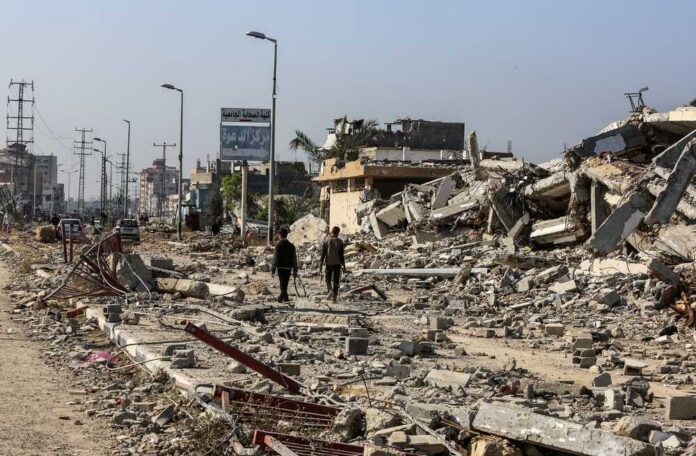
President Donald Trump’s February 15 announcement puts big numbers on the scoreboard: more than $5 billion in pledges for Gaza aid and reconstruction, plus thousands of personnel for an International Stabilization Force. The formal unveiling is scheduled for the Board of Peace’s first Washington meeting on February 19. That timeline matters because Gaza reconstruction does not wait for perfect politics; it waits for secure corridors, accountable administrators, and predictable funding.
The announcement also signals a familiar Trump tactic: move negotiations from slow multilateral bureaucracy to a branded, leader-driven venue. That can produce speed, but it can also produce blind spots. Money pledged at a conference is not money delivered at a checkpoint. Troops promised in a statement are not troops operating under a clear mandate. The Board’s real test starts after the headlines, when logistics, rules of engagement, and oversight start chewing up goodwill.
The ceasefire created breathing room, not a finished peace
The current moment sits on top of a grim staircase of dates. Hamas-led attacks on October 7, 2023 ignited the war. A U.S.-brokered ceasefire taking effect October 10, 2025 brought hostage releases and increased aid, and it helped launch a technocratic committee to manage Gaza’s day-to-day affairs. That’s progress, but not resolution. A ceasefire can pause battlefield momentum while political momentum stays stuck in mud.
Reports of continued Israeli strikes after the ceasefire, including a significant death toll cited by atrocity-monitoring analysts, reinforce the central dilemma: reconstruction cannot succeed in a combat zone that keeps reappearing. Readers who’ve watched peace processes for decades know the pattern. Ceasefires create the illusion of stability just long enough for donors to pledge, then the next security incident becomes the excuse for delay, diversion, or mission creep.
Indonesia’s troop pledge is a big deal for credibility and capability
Indonesia’s stated readiness to contribute up to 8,000 troops by the end of June is the kind of detail that separates a feel-good donor meeting from something operational. If such a deployment materializes under an accepted international framework, it could help with humanitarian distribution, protection of key sites, and stabilization tasks that local authorities cannot handle alone. It also sends a political signal: Muslim-majority participation can undercut the claim that stabilization equals occupation by another name.
The conservative, common-sense question is straightforward: what is the mission, and who controls it? Americans have seen how unclear mandates turn “temporary” forces into permanent fixtures. If an International Stabilization Force exists to protect aid deliveries and keep armed factions from hijacking reconstruction, its authority must be narrow, measurable, and time-bound. If it becomes a substitute for political settlement, it risks becoming an expensive, dangerous holding pattern.
The missing Palestinian seat is not a footnote; it’s the plot
The Board of Peace reportedly includes Israel’s prime minister while excluding Palestinian representatives. That choice may be explained as a practical step to keep negotiations manageable, but it also creates a legitimacy problem that no amount of funding can erase. Reconstruction is not just pouring concrete; it is deciding who issues permits, who runs police functions, who controls borders, and who audits spending. Those are sovereignty-adjacent decisions, and ignoring that reality invites backlash and corruption.
From an American conservative values lens, process matters because accountability matters. Taxpayers and donors should demand clear lines of responsibility and transparent auditing, especially when billions move fast. A structure that looks like it bypasses local consent or sidelines elected or recognized stakeholders can sabotage its own goals, because it gives extremists on every side a recruitment poster: “They’re rebuilding your home without you.” That message spreads faster than cement cures.
Washington politics is pulling in two directions at once
Congressional activity underscores that the U.S. government is not moving as a single unit. Legislation introduced in mid-February ranges from pushing Gaza food aid to prohibiting U.S. funds from supporting certain abuses in the West Bank. That split reflects a broader American debate: help civilians without writing blank checks; support Israel’s security while resisting actions that inflame long-term conflict. The Board of Peace lands inside that debate, not above it.
The UN Security Council meeting on February 18 added another layer, condemning West Bank expansion plans and pressing for a permanent ceasefire. That matters because any Gaza stabilization plan can be undermined by parallel escalation elsewhere. Treating Gaza as a stand-alone engineering project is a category error. If the region moves toward annexation rhetoric or retaliatory violence, donors will hesitate, troops will face new threats, and “reconstruction” becomes a slogan rather than a schedule.
The $5B question: delivery, oversight, and the risk of bypassing institutions
The Board’s appeal is speed and control, especially after years of frustration with UN systems, overlapping agencies, and political gridlock. Critics argue that bypassing established frameworks also bypasses safeguards designed to prevent diversion, favoritism, and mission drift. Both concerns can be true at the same time. The practical standard should be non-negotiable: publish pledge breakdowns, timelines, conditions, and independent auditing, then report results like a business would.
Watch: International Coalition Pledges $5B+ for Gaza Peace Effortshttps://t.co/QsER4Fu1vv
— RedState (@RedState) February 18, 2026
The uncomfortable bottom line is that Gaza’s recovery hinges on security arrangements that reduce violence, governance arrangements that prevent armed capture, and diplomatic arrangements that do not pretend one side can be edited out of the story. Trump’s Board of Peace could create momentum if it converts pledges into verified deliveries and pairs troops with a realistic mandate. If it becomes a photo-op that papers over structural conflicts, $5 billion will buy very little peace.
Sources:
Washington Policy Weekly: Trump’s Board of Peace Meets in Washington
UN Security Council to hold high-level meeting on Gaza before Trump’s Board of Peace convenes
Atrocity Alert No. 470