
President Trump has ordered a second aircraft carrier strike group to the Middle East as nuclear negotiations with Iran hang in the balance, sending an unmistakable message that the American military might stand ready to dismantle the regime’s nuclear ambitions if diplomacy fails.
Story Snapshot
- Trump deploys USS Gerald R. Ford to join USS Abraham Lincoln, creating dual-carrier strike force in Persian Gulf
- President warns of “drastic measures” similar to June 2025 strikes on Iranian nuclear sites if talks collapse
- Iran insists on nuclear-only negotiations while U.S. and Israel demand comprehensive deal including ballistic missiles
- Military buildup mirrors “peace through strength” strategy, leveraging force to extract Iranian concessions
Trump Doubles Down on Military Pressure
President Trump confirmed in a February 10 interview with Axios that the world’s largest aircraft carrier, USS Gerald R. Ford, is heading to the Middle East to join the USS Abraham Lincoln strike group already stationed in the region. The dual-carrier deployment represents a significant escalation in military posture as indirect talks with Iran resume through Oman and Qatar intermediaries. Trump stated plainly that another carrier “might be following” if Iran refuses to negotiate comprehensively on both nuclear weapons and ballistic missile programs, warning Tehran not to miscalculate American resolve as they did before June 2025.
Iran Talks Resume After June Conflict
Negotiations restarted on February 6 in Oman, marking the first diplomatic engagement since a twelve-day conflict last June when U.S. forces struck Iranian nuclear facilities. Iran’s security council secretary Ali Larijani has been shuttling between Muscat and Doha, conveying Tehran’s position that talks must focus exclusively on nuclear issues while preserving Iran’s claimed right to uranium enrichment. This narrow stance directly contradicts U.S. and Israeli demands for a comprehensive agreement addressing Iran’s ballistic missile arsenal and regional proxy activities. The Abraham Lincoln strike group, equipped with advanced fighters and Tomahawk cruise missiles, arrived over two weeks ago as talks resumed.
Netanyahu Pushes Back Against Concessions
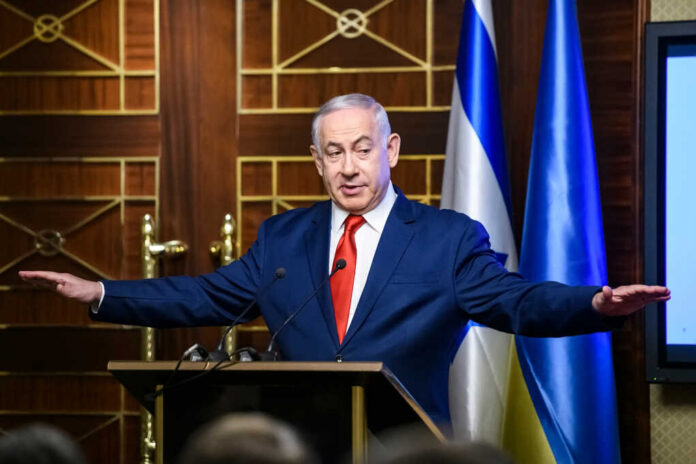
Israeli Prime Minister Benjamin Netanyahu visited Washington on February 11 to personally lobby Trump against any deal that leaves Iran’s nuclear infrastructure or missile capabilities intact. Netanyahu’s skepticism reflects Israeli security concerns that a limited agreement would merely delay rather than eliminate existential threats. Trump’s willingness to deploy overwhelming naval power demonstrates responsiveness to allied pressure while maintaining his stated preference for achieving a “tremendous deal” through negotiation backed by credible military force. This approach mirrors the administration’s broader Middle East strategy of projecting strength to compel adversaries into favorable terms.
Military Deterrence and Strategic Calculations
The dual-carrier presence recreates the military configuration used during previous Gulf crises, signaling immediate strike readiness against Iran’s nuclear sites, military installations, and leadership targets. Military analysts view the deployment primarily as a pressure tactic rather than preparation for imminent war, though experts note Iran possesses approximately 400 kilograms of 60-percent enriched uranium that could theoretically be weaponized. Trump’s strategy rests on the calculation that Iran will negotiate seriously only when facing overwhelming force, a lesson he believes was validated by the June 2025 strikes that brought Tehran back to negotiations after months of defiance.
TRUMP: Carrier headed to Middle East ”in case we don’t make a deal’ with Iranhttps://t.co/DTvAtmF34S
— ConspiracyDailyUpdat (@conspiracydup) February 13, 2026
The coming weeks will determine whether Trump’s approach forces Iranian concessions or triggers wider regional conflict. For Americans exhausted by endless Middle East entanglements yet concerned about nuclear proliferation, this represents the clearest test of whether military strength can secure lasting peace. The administration’s willingness to deploy America’s most powerful naval assets demonstrates commitment to preventing a nuclear-armed Iran without repeating the costly ground wars that drained American blood and treasure over the past two decades.
Sources:
Trump says he might send second carrier to strike Iran if talks fail – Axios