
Iran’s vow to “rain fire” on U.S. troops is the clearest warning yet that Washington’s Middle East buildup could slide from airstrikes into a ground war that many MAGA voters never signed up for.
Story Snapshot
- Iran’s parliament speaker threatened U.S. forces directly as American ships and troops mass near the region.
- Reports cited by multiple outlets say the Pentagon has been preparing for possible ship-to-shore missions, fueling invasion speculation.
- President Trump publicly floated sweeping strikes on Iranian infrastructure if no deal is reached, even as Tehran denies talks are producing results.
- Threats now extend beyond military targets to universities, shipping choke points, and critical energy and water infrastructure.
Iran’s “Rain Fire” Message Tracks the U.S. Buildup
Mohammad Bagher Ghalibaf, Iran’s parliamentary speaker, issued the headline threat as U.S. naval assets and embarked forces moved into position near the Middle East. Reports tied the warning to growing talk of “boots on the ground,” including preparation for ship-to-shore operations and possible raids. The most concrete, widely repeated datapoint is the arrival of the amphibious assault ship USS Tripoli with roughly 3,500 personnel, which sharpened Tehran’s deterrence messaging.
American voters are hearing two competing signals at once: “pressure for a deal” language on one hand, and deployments that look like escalation on the other. That tension matters politically because Trump’s second-term coalition includes many voters who supported his earlier promises to avoid new regime-change adventures. Iran’s statement is also designed to put U.S. commanders on notice that any ground move could trigger direct attacks, not just proxy harassment.
Trump’s Ultimatum Targets Energy and Water Infrastructure
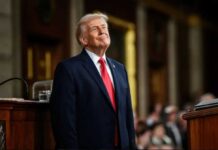
President Trump’s public posture has mixed negotiation claims with sharp ultimatums. Reporting from late March described threats to intensify strikes against major Iranian infrastructure—electricity production, oil wells, and the export hub at Kharg Island—if Tehran does not agree to a deal tied to the Strait of Hormuz. Those targets are not abstract; hitting them would predictably ripple into global energy markets and directly affect American families through higher fuel and shipping costs.
The administration’s critics inside the broader conservative world are not disputing that Iran is hostile; they are asking what the defined end state is and how it avoids another open-ended conflict. This also indicates uncertainty about whether any invasion plan actually exists beyond preparations and contingency planning. It matters: a buildup can deter, but it can also misread signals and trap leaders into escalation if both sides believe the other is bluffing.
Choke Points, Proxies, and a Wider Regional Fuse
The conflict’s geography creates automatic escalation risks because the world’s shipping lanes become leverage. Even without a single U.S. soldier stepping onto Iranian soil, threats to close straits and attack ports can tighten global supply chains. For Americans still angry about inflation and fiscal mismanagement, the prospect of another energy shock is a serious, kitchen-table concern.
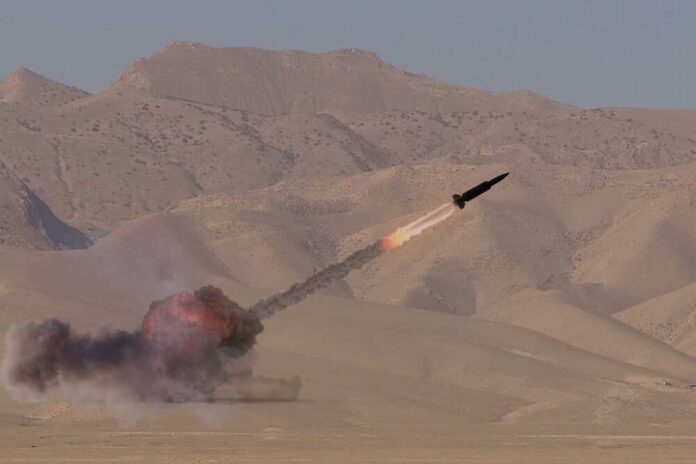
Regional spillover has also been a featured theme. The research notes rockets hitting Baghdad airport and a reported industrial-site fire in Israel attributed to Iranian missile activity. It also highlights a tit-for-tat pattern around infrastructure and “soft” targets—where each side implies the other has crossed lines, then broadens what it considers fair game. That dynamic is how limited campaigns turn into sprawling wars without a formal declaration or clear vote.
Universities and Civilian Institutions Get Pulled Into the Threat Matrix
One of the more disturbing developments is the way universities and civilian institutions have become part of the pressure campaign. After strikes reportedly hit Iranian universities, Iran threatened U.S. and Israeli universities, and a major U.S.-linked university in Beirut reportedly shifted to online operations amid concerns. Even when such threats are posturing, normalizing them erodes long-standing boundaries between combatants and civilians and raises the chance of miscalculation.
Iran’s leadership has also floated additional escalation levers, including discussion of its posture toward international nuclear frameworks. What is clear is that the rhetoric is hardening as the air campaign stretches into its fifth week. For constitutional conservatives, the key questions now are what Congress is being told, what authorities are being invoked, and whether the U.S. is drifting toward another costly war.
Sources:
Iran warns US over ‘boots on the ground’ reports
Iran warns US over ‘boots on the ground’ reports