A new policy threatens to invoke the Insurrection Act, putting Minnesota’s sovereignty at risk and sparking national debate.
Story Highlights
- President Trump threatens to deploy military forces in Minnesota using the Insurrection Act.
- The threat arises amid protests and attacks on ICE agents during mass deportation operations.
- Local officials, including Governor Tim Walz, push back against federal overreach.
- This situation highlights tensions between federal authority and state sovereignty.
Trump’s Bold Move to Invoke the Insurrection Act
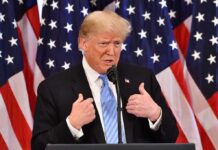
On January 15, 2026, President Donald Trump announced via Truth Social his intention to invoke the Insurrection Act in Minnesota. This came after violent protests erupted in response to federal mass deportation operations in Minneapolis and St. Paul. The situation escalated following multiple incidents involving ICE agents, including a controversial shooting of a Venezuelan man. This move marks a significant assertion of federal power over state decisions, reflecting Trump’s commitment to enforcing immigration laws despite local resistance.
The Insurrection Act, rooted in the Constitution and enacted in 1807, allows the president to deploy military forces domestically under certain conditions. Historically, it has been used to address civil rights issues or at a governor’s request. However, Trump’s approach targets protests against federal actions without state consent, setting a new precedent. The act’s invocation without state approval raises questions about federal overreach and its impact on state autonomy, a crucial concern for conservative leaders and citizens alike.
🔔 Trump said he’s prepared to deploy the U.S. military into cities under the Insurrection Act.
“The strongest tool we have, and we haven’t used it yet… the Insurrection Act.”
THE U.S. MILITARY COULD BE HEADED TO A CITY NEAR YOU.
🇺🇸 🔥 pic.twitter.com/ZMH5ei11ed
— Digital Gal (@DigitalGalX) January 5, 2026
Local Leaders Push Back Against Federal Overreach
In response to the federal government’s actions, Minnesota Governor Tim Walz and Minneapolis Mayor Jacob Frey have voiced strong opposition. They argue that the federal operations have created chaos and disrupted local governance. Governor Walz labeled the situation a “campaign of organized brutality” and emphasized the need for state control to maintain order and protect residents. Mayor Frey described the current conditions as “unsustainable,” highlighting the strain on local resources amid the federal presence.
The ongoing protests have seen clashes between ICE agents and community members, resulting in vandalism and violent encounters. As tensions rise, the local government seeks to assert its authority and prevent further escalation. The federal response, framed by Trump as necessary to protect ICE agents from “professional agitators,” pits the administration’s immigration policies against local efforts to maintain peace and order.
Implications for State and Federal Relations
The potential invocation of the Insurrection Act in Minnesota could have significant short-term and long-term implications. In the short term, it risks escalating clashes and undermining state governance. In the long term, it sets a precedent for federal intervention in state matters, particularly concerning immigration enforcement. Such actions could erode state autonomy and fuel national polarization, further dividing the country on issues of federal authority and local governance.
This situation also affects immigrants, local residents, and law enforcement agencies caught in the crossfire. Economic disruptions, heightened fear, and community division are among the immediate social impacts. Politically, this scenario may bolster Trump’s support among those favoring strict immigration policies while galvanizing opposition from those advocating for state sovereignty and local decision-making. As developments unfold, the balance between federal power and state rights remains a critical topic of debate among policymakers and citizens.
Sources:
Trump Threatens to Invoke the Insurrection Act in Minnesota
Trump Threatens to Use the Insurrection Act in Minnesota
Trump Considers Insurrection Act in Minneapolis
Live Updates: Trump Threatens Insurrection Act