
One misframed interview line is now being used to inflame the Middle East and paint the Trump administration as “greenlighting” land grabs—before Americans have even seen the full context.
Quick Take
- U.S. Ambassador to Israel Mike Huckabee drew swift condemnation after an interview was reported as endorsing Israeli control over additional territory.
- The U.S. Embassy in Israel responded that Huckabee’s remarks were taken out of context, underscoring uncertainty about the exact wording.
- Arab and Islamic states escalated formal protests as regional tensions remain high and ceasefires remain fragile.
- Limited public details about the full interview transcript leave major questions about what was said versus what was interpreted.
What Huckabee Said—and Why the Blowback Was Immediate
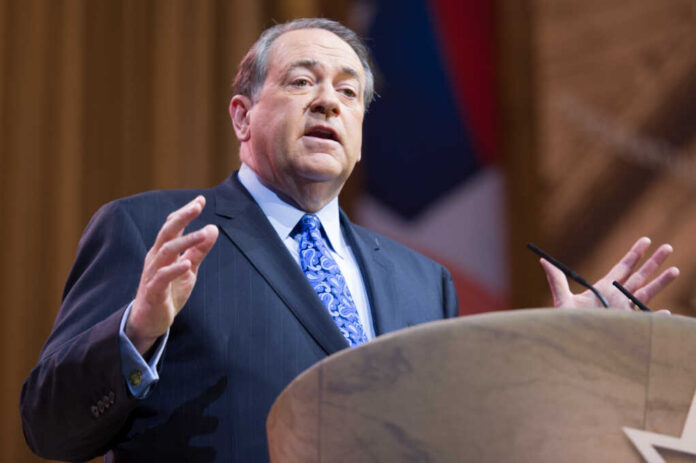
U.S. Ambassador to Israel Mike Huckabee, a former Arkansas governor and longtime Trump ally, triggered a diplomatic uproar after remarks in an interview were reported as suggesting Israel has a “right” to control certain territory in the Middle East. Arab and Muslim countries condemned the comments, treating them as a major signal about U.S. policy. The speed of the backlash matters: it shows how quickly a single disputed line can be weaponized in a volatile region.
The U.S. Embassy in Israel moved to contain the fallout by saying Huckabee’s remarks were taken out of context. That response is important, because neither report provides a full, verbatim transcript of the exchange—leaving Americans forced to judge a high-stakes diplomatic controversy through partial summaries. Without the complete interview record, it is difficult to separate what Huckabee precisely stated from how foreign governments and media interpreted the comments in the most provocative possible way.
Why Context Matters in a Region Where Words Become Policy Signals
The dispute is unfolding amid ongoing instability tied to the Israel-Hamas war and broader territorial and security disputes. Reporting described the moment as occurring alongside fragile ceasefires and sensitive U.S.-brokered talks, a setting where governments often treat rhetorical slips as real policy commitments. Arab states, in particular, framed the reported remarks as encouragement for annexation or “land expansion,” a charge that raises the diplomatic temperature even if the underlying quote is incomplete.
Huckabee’s appointment itself provides additional context for why the reaction was so sharp. He is known for strong pro-Israel views rooted in evangelical Christian support for Israel, and his selection signaled a U.S. posture that prioritizes a closer U.S.-Israel alignment. Critics in the region view that alignment as evidence Washington cannot serve as a neutral mediator. Supporters argue clarity in alliances is not the same as endorsing expansion, especially when disputed remarks may have been clipped or paraphrased.
What the Embassy’s “Out of Context” Defense Can—and Can’t—Fix
The embassy’s defense attempts to draw a line between what a diplomat intended and what adversarial audiences heard. In practical terms, however, damage control is harder once foreign ministries issue formal protests. The reporting leaves a key limitation: the public does not have the full exchange, and the exact phrasing attributed to Huckabee varies by summary. That gap is not trivial; it is the difference between a broad, values-based defense of an ally and a concrete endorsement of changing borders.
Strategic Stakes for U.S. Interests and Constitutional-Minded Voters at Home
For American voters already exhausted by years of global chaos and elite messaging games, the bigger takeaway is how quickly international actors try to define U.S. intent for domestic political pressure. If a partial quote can be turned into a geopolitical crisis, the United States risks losing credibility as a deal-broker and inviting retaliatory threats to trade, energy stability, or regional cooperation. The available reporting flags those risks, but it also shows the limits of what can be responsibly concluded without the complete interview record.
U.S. ambassador causes uproar by claiming Israel has a right to much of the Middle East – https://t.co/1yLkRWBIdo – @washtimes
— Christoph Resmerowski (@ChristophResme1) February 23, 2026
What happens next will likely depend on whether more complete context emerges and how the State Department chooses to reinforce—or clarify—America’s position. For now, the known facts are narrow: an interview sparked outrage, Arab and Islamic states protested, and the U.S. Embassy said the remarks were taken out of context. Until the full remarks are publicly accessible, Americans should treat the loudest claims with caution and demand the actual language before accepting sweeping narratives about U.S. policy.
Sources:
U.S. ambassador causes uproar by claiming Israel has a right to… (Pittsburgh Post-Gazette)
Arab and Islamic states protest U.S. ambassador to Israel’s remarks on Israel land expansion (Euronews)