Florida’s new “proof-of-citizenship” voting law is headed straight into a constitutional showdown—raising the question of whether election integrity can be tightened without putting lawful voters through a bureaucratic gauntlet.
Story Snapshot
- Florida Gov. Ron DeSantis signed HB 991, dubbed “Florida’s SAVE Act,” requiring proof of U.S. citizenship for voter registration and shifting major verification rules to begin in 2027.
- The law also mandates paper-only ballots, removes student and retirement home IDs as acceptable verification, and requires candidates to disclose dual citizenship.
- Voting-rights groups filed federal lawsuits within days, arguing the law violates the First and Fourteenth Amendments by risking disenfranchisement.
- County election officials warn the measure could trigger significant administrative workload as databases are updated and cross-checked across counties.
What Florida’s HB 991 Changes—and When It Hits Voters
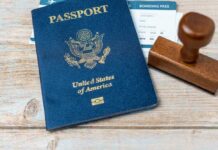
Florida Gov. Ron DeSantis signed House Bill 991 on April 1, 2026, at the Eisenhower Recreation Center in The Villages, putting the state on a path toward stricter voter citizenship verification. The law, labeled “Florida’s SAVE Act,” requires voters to prove U.S. citizenship for registration using approved documents such as a driver’s license, birth certificate, or passport. The biggest practical change is timing: the law is set to take effect in 2027, not the 2026 cycle.
HB 991 goes beyond the typical “show ID” debate by reshaping the type of identification that counts and how elections are conducted. Reporting on the bill notes that student IDs and retirement home IDs are no longer accepted for verification under the new standard. The measure also includes a paper-only ballot requirement, which supporters say makes elections easier to audit and harder to manipulate, while critics argue it could complicate accessibility and administration depending on implementation details.
Retroactive Verification and Candidate Disclosures Add New Pressure Points
One of the most contentious parts of HB 991 is its retroactive reach. The research indicates the law applies not only to new registrations but also to existing registered voters, a design choice that can create large-scale verification demands and potential roll cleanup disputes. The bill also requires candidates to disclose dual citizenship. For conservative voters focused on sovereignty and civic clarity, that disclosure can look like basic transparency, but it also adds another legal target for challengers.
Florida’s move fits into a broader post-2020 trend in Republican-led states that prioritized tightening election procedures, including restrictions on ballot harvesting and other reforms already enacted in Florida. The research also describes HB 991 as mirroring a federal SAVE Act concept that stalled in Congress in 2024–2025. That context matters because it frames Florida as testing a state-level model that could influence national policy—if it survives federal court challenges and proves workable for election administrators.
Immediate Lawsuits Put Federal Courts at the Center of the Fight
Voting-rights groups, including the League of Women Voters, filed federal lawsuits on April 1–2, 2026, seeking to block the law. The challenges argue the requirements violate the First and Fourteenth Amendments by creating unlawful burdens that could disenfranchise eligible Americans. Based on the research provided, no rulings have been issued yet. The lawsuits will likely focus on whether the state can justify the burdens relative to the evidence of non-citizen voting and whether the retroactive element is narrowly tailored.
Election Integrity vs. Administrative Burden: The Reality Check for Counties
County-level election offices will carry much of the operational load if HB 991 is implemented as written. Okaloosa County Elections Supervisor Paul Lux is cited warning of “enormous” database work, including increased document requests when voters move or update records. Florida’s approach relies more heavily on database cross-checking and information-sharing among counties, which can strengthen verification but also expands the chance of bureaucratic errors that ensnare lawful voters—especially anyone with name changes or incomplete documentation on file.
For conservatives who are exhausted by decades of Washington waste and foreign-policy overreach, this story lands in a different nerve: trust. Election integrity measures are popular precisely because citizens don’t want elections decided by loopholes, non-citizen registrations, or sloppy verification. At the same time, any system that pushes the burden onto ordinary Americans—especially seniors, low-income voters, or naturalized citizens who may not have paperwork readily available—invites backlash and court intervention. The key unknown is whether Florida can prove the added friction is justified and constitutional.