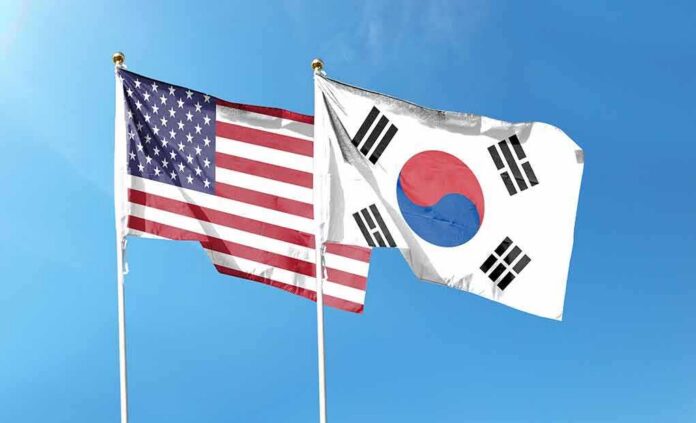
President Trump ordered a substantial cut to U.S.–South Korea military drills on the eve of their start, calling them costly and needlessly hostile toward North Korea.
Story Highlights
- Trump said he instructed Defense Secretary Pete Hegseth to “substantially reduce” joint drills with South Korea.
- The order came hours before the Ulchi Freedom Shield exercises were set to begin.
- Trump cited high costs and said large drills send the wrong signal to North Korea.
- Details on the exact scope of reductions were not specified in initial reports.
What The President Ordered And Why It Matters
On August 16, President Trump said he told Secretary of Defense Pete Hegseth to “substantially reduce” joint U.S.–South Korea military exercises. He argued the drills cost too much and send a “hostile” signal to North Korea. He added that North Korean leader Kim Jong Un had been “unthreatening and respectful” during his time in office. The announcement came as the annual Ulchi Freedom Shield exercises were due to start the next day.
Published reports identified Ulchi Freedom Shield as an 11-day training event involving major readiness tasks. Prior coverage described plans for scenarios like countering drones, handling satellite navigation disruption, and responding to cyberattacks. Other reporting said allied forces were expected to practice live-fire precision targeting and the movement of equipment to the front. These drills aim to keep forces ready against North Korea’s evolving missile and nuclear threats.
What Is Known And What Is Not Yet Clear
Trump’s order is clear in intent but light on specifics. Reports did not detail which parts would be reduced, how many troops would be cut, or whether live-fire events would be canceled. Outlets did not cite a Pentagon execution memo the same day. That leaves timing and scope open. North Korea had already denounced the planned drills that week, which is common for Pyongyang state media. These facts frame the decision but do not define its final scale.
Cost was a central reason cited by Trump. He said there was “no reason” to spend large sums on the exercises. However, the reports did not include a specific budget figure or a Defense Department estimate of expected savings linked to a reduction. Cost debates are not new. Past adjustments to U.S.–South Korea drills also used savings and efficiency as selling points, especially when leaders sought to lower tensions without stopping training entirely.
Alliance Readiness, Signaling, And The Bigger Picture
U.S.–South Korea exercises serve two missions at once: they build readiness and send signals to both allies and rivals. Research and past analysis show that scaling drills up can reassure Seoul and strengthen teamwork, while also prompting harsh words from Pyongyang. Scaling drills down can cool signals but may spark warnings about deterrence gaps. Experts have debated this trade-off for decades, and outcomes depend on scope, timing, and crisis context.
This decision lands amid rising North Korean missile activity and long-running arguments at home about cost, focus, and America’s role abroad. Conservatives often see oversized, open-ended missions as wasteful and misaligned with “America First” priorities. Liberals often warn that sudden cuts can weaken alliances and leave gaps that bad actors exploit. Many on both sides worry that officials manage optics more than strategy. Clear implementation details from the Pentagon would help address those shared concerns.
Sources:
townhall.com, ksat.com, internazionale.it, reuters.com, pbs.org, axios.com, abcnews.com, scmp.com, bloomberg.com, quincyinst.org, stimson.org