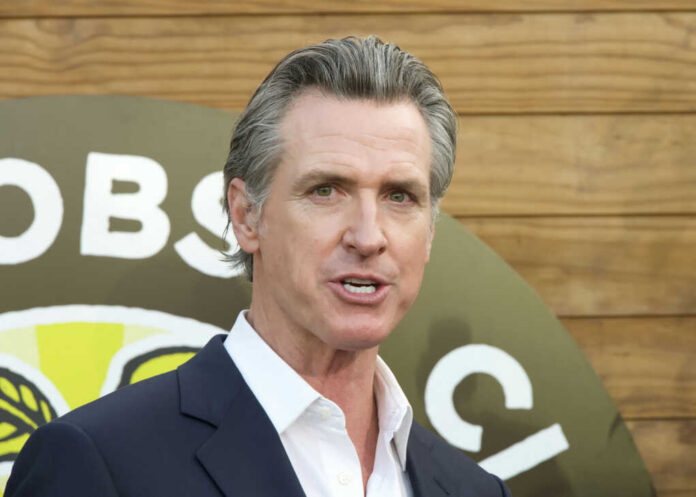
Gavin Newsom just signaled that Democrats may be preparing to turn U.S. military aid into a political weapon—right as Americans are being pulled deeper into war with Iran.
Story Snapshot
- Gov. Gavin Newsom called it “appropriate” to describe Israel as an “apartheid state” and said the U.S. may have “no choice” but to reconsider military support.
- Newsom’s remarks mark a clear shift from his earlier posture of strong support after Oct. 7 and his 2024 opposition to ending U.S. aid.
- The comments landed during a joint U.S.-Israeli military confrontation with Iran, increasing scrutiny of Washington’s commitments overseas.
- Reporting indicates Newsom’s move may be political opportunity inside today’s Democratic base, not “political suicide,” despite some media framing.
Newsom’s “Apartheid” Label Signals a Democratic Line in the Sand
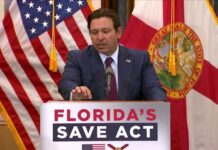
Gov. Gavin Newsom’s March 25 remarks on the liberal “Pod Save America” podcast put a centrist Democratic heavyweight on record saying Israel can “appropriately” be described as an “apartheid state” and that the United States should reconsider military support. Newsom also pointed to commentary from New York Times columnist Thomas Friedman as part of his reasoning. The substance matters: a governor widely viewed as a future presidential contender is moving Democratic messaging further from unconditional support.
Newsom’s office later tried to narrow the blast radius. Spokesperson Izzy Gardon said Newsom believes Israel has a right to exist and defend itself, while describing the governor’s comments as “calling out a difficult truth” about the direction of Israeli leadership and its implications for Israel’s safety. That clarification may soften the rhetoric, but it does not erase the core shift: conditioning or reconsidering U.S. aid is now being discussed openly by prominent Democrats.
A Clear Timeline: From Solidarity After Oct. 7 to Public Reassessment
Newsom’s record shows why the moment is drawing attention. After Hamas attacked Israel on Oct. 7, 2023, he traveled to Israel less than two weeks later and met with Israeli officials, including Prime Minister Benjamin Netanyahu. In October 2024, he said he would not support ending U.S. military aid. By January 2026, he was already threading a needle on conservative media, rejecting genocide claims while criticizing “dehumanization” in Netanyahu-era rhetoric.
By late March 2026, the needle became a pivot. Newsom criticized Netanyahu’s political and legal troubles and pointed to hardline coalition elements advocating West Bank annexation. He also questioned the strategic logic of expanding conflict with Iran, arguing that Israel still had not resolved the Hamas problem after two years. That set of statements places Newsom in a position increasingly common among national Democrats: separating support for Israel’s existence from support for its current government—and from open-ended U.S. backing.
How This Lands With Conservatives in 2026: War Fatigue Meets Aid Skepticism
For conservative voters living through a second Trump term and a widening war with Iran, the immediate question is less about Newsom’s personal politics and more about America’s trajectory. Many MAGA voters remain strongly pro-Israel, but the movement is visibly split over deeper U.S. involvement overseas and the price tag that comes with it—especially when energy costs rise and families feel squeezed. Newsom’s rhetoric will intensify pressure for Washington to justify commitments in plain, constitutional terms.
Newsom’s remarks also collide with a broader shift documented in recent reporting: Democrats’ sympathy on the Israel-Palestinian question has moved sharply, with younger voters driving the trend. Multiple accounts cite internal Democratic concerns that national candidates paid an electoral cost for their Israel posture in 2024. Newsom governs a state with a large Jewish population, so his repositioning is not cost-free. Still, the available analysis suggests Democratic elites increasingly view unconditional support as a liability with their base.
“Political Suicide” or 2028 Positioning? The Evidence Points One Way
Some coverage framed the story as if progressive voices would punish Newsom for his Israel posture. Yet the collected reporting undercuts that “political suicide” narrative by emphasizing how far the Democratic mainstream has already moved. One analysis argues Newsom’s prominence makes his criticism more significant precisely because it signals normalization. Newsom’s team has attempted a careful distinction—pro-Israel’s right to exist, anti-current leadership’s direction—but the center of gravity is unmistakable: more Democrats now talk about leverage and conditions.
‘Political Suicide’: Far-Left Podcasters Say Gavin Newsom’s Sudden Israel Support Will End Him
READ: https://t.co/uzAsjrEEWm pic.twitter.com/vCycNzjoFR
— The Gateway Pundit (@gatewaypundit) March 26, 2026
That has real-world consequences for conservatives watching Washington. If foreign aid becomes a partisan bargaining chip, it can amplify polarization at the worst possible time—when Americans are being asked to accept risk, cost, and escalation in Iran. The research also notes the original story premise appears inverted: the notable development is not “sudden Israel support,” but a public move away from unconditional backing. With war pressures rising, voters should demand clear objectives, defined limits, and accountability before any open-ended commitment becomes “the new normal.”
Sources:
https://www.jpost.com/american-politics/article-887850
CAIR-CA Welcomes Gov. Newsom’s Remarks Recognizing Israel as an Apartheid State
https://forward.com/opinion/810358/gavin-newsom-israel/
https://jewishinsider.com/2026/03/gavin-newsom-israel-shift-left-pod-save/