

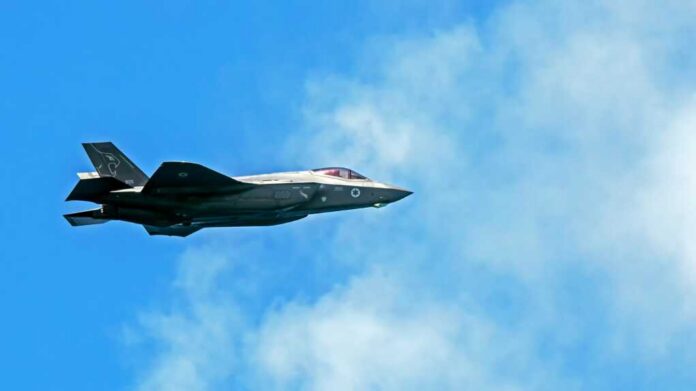
America’s air-superiority crown jewel can’t simply be rebuilt on demand—and that hard reality now collides with rising threats and a shrinking margin for error.
Quick Take
- The Air Force ended F-22 production in 2011–2012, and a 2017 Air Force report concluded restarting the line is effectively uneconomical due to massive startup and per-jet costs.
- The current inventory sits around 183–185 aircraft, with about 143 combat-coded, leaving a small fleet to carry an outsized mission.
- The FY2026 budget request highlights a “viability” upgrade path—sensors, missile warning, communications, and reliability—rather than new production.
- Planned upgrades include IRST pods with deliveries targeted for Q2 FY2028 and a missile-launch warning modernization decision slated for Q4 FY2026.
- With sixth-generation timelines uncertain, the Air Force is betting on modernization to keep the Raptor relevant well into the 2060s.
Why the F-22 Line Stayed Closed—and Why That Still Matters
The U.S. Air Force stopped building F-22 Raptors after the final aircraft rolled out in late 2011 and the last delivery occurred in 2012. A later Air Force assessment laid out why a restart is not just inconvenient but financially punishing: estimates commonly cited put a restart for 194 additional aircraft around $50 billion, including roughly $9.9 billion in startup costs and per-jet costs above $200 million. That decision locked the nation into upgrades over replacement-by-replication.
Budget politics shaped that outcome long before today’s headlines. The original Advanced Tactical Fighter vision called for hundreds more jets, but post–Cold War cuts and later procurement decisions steadily reduced the buy. By 2009, production was capped at 187 aircraft amid executive-branch pressure and a broader pivot toward the F-35. The result is a familiar Washington pattern: short-term savings and “program swaps” that look tidy on paper, followed by long-term strategic constraints when threats evolve faster than procurement cycles.
https://www.youtube.com/watch?v=_Ve8NDaaTF0&vl=en-US
A Small Fleet Carrying a Big Mission
Today’s force structure underscores the bind. Public reporting places the overall inventory around 183–185 aircraft, with roughly 143 considered combat-coded, a reminder that not every tail is ready for front-line tasking at any given time. A limited fleet drives high utilization, maintenance strain, and hard choices about readiness, training, and modernization. It also explains why the Air Force extended legacy air-superiority capacity, including F-15C/D service life planning that stretched into 2026 as a bridging measure.
The strategic backdrop is not theoretical. Open-source assessments frequently point to China’s growing fifth-generation inventory, including the J-20, as a pacing challenge. Against that environment, the Air Force has leaned on what the F-22 still does uniquely well—speed, stealth, and first-shot advantages—while accepting the uncomfortable truth that America cannot quickly “buy its way out” by simply reopening a factory. That reality puts a premium on keeping existing Raptors credible, connected, and lethal across evolving threat envelopes.
FY2026 “Viability” Upgrades: Sensors, Survivability, and Reliability
The most concrete near-term signal is budget-driven. The FY2026 request includes $90.34 million for a package described as “viability” upgrades, emphasizing improvements that keep the jet relevant rather than reinventing it. Reported elements include Infrared Search and Track pods—an increasingly important capability for finding and tracking targets without broadcasting—and a missile-launch detector modernization effort. The package also highlights communications, avionics updates, and reliability fixes aimed at squeezing more operational availability out of a small, high-demand fleet.
Timelines matter because modernization only helps if it arrives before the threat curve steepens. Reporting on the upgrade plan points to an initial 30 IRST pods with deliveries targeted for the second quarter of FY2028. The missile warning path involves modernizing the Missile Launch Detector through an IRDS-related effort, with a low-rate decision targeted for the fourth quarter of FY2026. Those dates illustrate both progress and risk: programs move, but they move on government calendars—exactly why a stable, disciplined acquisition approach is essential.
Modernizing the Raptor vs. Chasing the Next Big Program
The Air Force’s modernization emphasis also reflects uncertainty on what replaces the Raptor—and when. Senior Air Force leadership has publicly indicated that a definitive, one-for-one replacement path was not locked in as of 2024, even as next-generation efforts faced pauses and reassessments. In that environment, upgrading a proven airframe becomes a practical hedge. Planned and discussed enhancements include better data links—especially working alongside the F-35—plus weapons and software updates that expand the Raptor’s ability to fight inside modern contested airspace.
For a conservative audience tired of grand plans that never deliver, the takeaway is straightforward: capability must be sustained with measurable upgrades, not slogans. The F-22 story is a case study in what happens when national defense procurement becomes a political bargaining chip and a budget math exercise. With production restart widely assessed as economically prohibitive, the only responsible path is modernization that preserves deterrence while the next generation matures—without repeating the fiscal and strategic whiplash that left the nation short of Raptors in the first place.
Sources:
New F-22 Upgrade Package To Keep The Jets Viable Laid Out
Lockheed Martin F-22 Raptor
F-22 Raptor Fighter Is Getting So Many Big Upgrades It Will Now Fly Until 2060
Super F-22 Propels Raptor into 2060s
Why USAF Will Soon Have Over 30 Extra F-22 Stealth Fighters
F-22
The plane truth: fewer F-22s mean a stronger national defense